
There is a general meeting of minds among observers on the difficulty of positive factors breaking through.
Investors have turned cautious and parked their funds in less risky and fundamentally strong stocks ahead of the second-quarter earnings season.

All the sectoral indices, led by realty, metal, consumer durables and power were trading in the negative zone on Thursday.

Experts say the BSE Sensex could rise to around 32,000 in a year.

The market direction will be guided by corporate earnings, especially the oil & gas companies, since they were responsible for earnings disappointment in the past quarter as well.

Ends the August F&O series on a high tracking gains in RIL, HDFC and ITC.
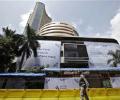
Capital goods, IT, auto and pharmaceuticals lead gains for the financial year

A fall presents an opportunity to buy rate-sensitive stocks.
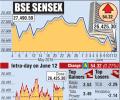
Oil, banks eneded the day in green while few in auto sector lost heavily.

The rupee had retreated from three-week high and ended six paise down at 60.67 against the dollar on demand from importers for the US currency in Thursday's trade.

If you want to invest in mutual funds, but don't want your investment to dip below market returns, then you must know the difference between 'active' and 'passive' investing.

This weakness is likely to continue in the near-term.

Metal stocks fell on Tuesday, with the S&P BSE metal index sliding 2.8 per cent compared to the 0.64 per cent fall in the benchmark S&P BSE Sensex
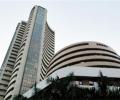
Market breadth on the BSE ended firm as 1,908 shares advanced and 1,156 shares declined

Softening rural consumption and the likelihood of weak corporate earnings in the March quarter saw investors dump stocks.

Geopolitical concerns, earnings sees investors rush to safe haven plays post the Union Budget presentation in July.

FMCG stocks have underperformed the market, falling 2.2 per cent so far in 2014.

Ricoh India, the largest gainer among these pack, has rallied 192 per cent from Rs 294 to Rs 859 on the BSE so far in the current calendar year.

Auto firms are likely to perform better in coming months.

Better-than-expected financial results in Q3 due to higher revenue growth and margins in key markets fuel the rally

Markets ended in red; index heavyweight under pressure.

Most Asian markets were trading weak on Monday.

Analysts say that the focus now shifts to global events

Benchmark share indices gained for the fifth straight session on Thursday led by index heavyweight Reliance Industries.

Since its peak, the S&P BSE Sensex has dropped nearly 3,000 points.

The fall in metal and mining stocks comes on the back of weak Chinese trade data
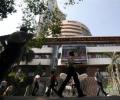
Can the poll outcome be a trigger for a meaningful correction?

The year 2014 has been one of the best for investors in the equity markets.
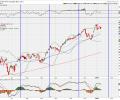
It is too early to say if we have seen the "final" bottom to these stocks in August 2013 or if another attempt to test them will be made before or just after elections, says Sonali Ranade.

The sentiment around Indian equities remains positive and unchanged.
The Sensex ended in red on domestic concerns.

Major global indices like CAC 40, DAX Shanghai Composite, Hang Seng, Nikkei, Straits Times, Sensex, Nifty have lost 1% - 10% in a week

The BSE Mid-and Small-cap indices outperformed their larger peers rising 72 per cent and 52 per cent, respectively, during Samvat 2070.

BSE Mid-cap index ended lower by over 2.5% and BSE Small-cap index tumbled over 3%.

The fuel reforms are a very important signal of the government's commitment to tough economic reforms.

Experts suggest domestic factors rather than the Greece crisis would determine the course of the Indian equities.
ONGC was the top gainer which surged over 4% followed by Axis, SBI, CIL

Sensex gained nearly 0.4% or 96 points at 26087 level while Nifty ended up by 42 points or 0.5% at 7,791.40 level.

Markets were left high and dry last week, as the 'Monsoon Effect' played havoc on trader sentiment.
Sensex gained over 100 points and ended at 26147.33 while the Nifty ended 27 points higher at 7,795.75.
